
Last Saturday, I found myself staring into the fridge at 8 PM, feeling that familiar post-weekend slump. It was raining outside, the kind of gray, persistent drizzle that makes you crave something warm and heavy. I wanted comfort food. I wanted something that felt like a hug in a bowl. But here’s the problem: I live alone. Well, mostly alone. My partner is in and out, but we don’t eat like a family of four anymore. We eat like two tired adults who just want good food without the guilt of eating the same thing for four nights straight.
I’ve made traditional spaetzle before, and let me tell you, the standard recipes are designed for an army. They call for cups of flour and gallons of milk. The result? A mountain of noodles that ends up in the fridge for days, getting rubbery and sad by Tuesday. I wanted that soft, pillowy, cheesy comfort of Oktoberfest, but scaled down for just us. I needed a recipe that felt indulgent but didn’t require a week of meal prep to justify the effort.
So, I tweaked my usual method. I tested the ratios until the batter was just right—thick enough to hold its shape but thin enough to drop easily. I found the perfect blend of cheeses that melted without splitting. And I finally cracked the code on cooking for two. This Oktoberfest Cheesy Spaetzle for Two is my answer to the leftover dilemma. It’s creamy, it’s garlicky, and it tastes like a trip to Munich, but it fits perfectly into a 10-inch skillet. No waste. No leftovers. Just pure, concentrated comfort.
I’ve made this Oktoberfest Cheesy Spaetzle for Two at least ten times in the last three months. It’s become my secret weapon for those “I need something special but easy” nights. Whether you’re feeding just yourself or sharing with a partner, this dish delivers all the flavor without the hassle. It’s not just a side dish; it’s a meal in itself when you add the right toppings.
Why You’ll Love This Small-Batch Comfort
Let’s be real. Cooking for one or two people can feel like a chore. You’re constantly debating whether to turn on the oven or heat up leftovers from three days ago. This recipe changes that dynamic. Here’s why this specific version has earned a permanent spot in my weekly rotation:
- Zero Waste Guarantee — I’m serious. The ingredient amounts are calculated for two servings. You won’t have half a jar of cheese or a bag of flour left over. It’s satisfying to cook a meal that disappears completely.
- Texture Perfection — Most small-batch egg noodle recipes turn out gummy. This batter has the right hydration. The spaetzle come out tender on the inside with a slight chew on the outside. It’s the gold standard.
- Under 30 Minutes — From mixing the batter to plating, it takes about 25 minutes. I’ve made this after coming home from work exhausted. It’s fast enough for a weeknight but fancy enough for a date night.
- Cheesy Without Being Greasy — I use a mix of Gruyère and Parmesan. Gruyère gives that nutty, melt-in-your-mouth quality, while Parmesan adds salt and depth. It coats every noodle without pooling oil at the bottom of the bowl.
- One-Pan Cleanup (Mostly) — You only need one bowl for the batter and one skillet for cooking. If you’re like me, you’ll appreciate not facing a sink full of dishes. It’s efficient cooking.
This is my go-to when dinner needs to just work. It’s reliable, delicious, and finally respects the fact that we don’t need to feed a crowd to enjoy a good meal.
Key Ingredients for the Best Spaetzle
When you’re cooking for two, every ingredient counts. There’s no room for cheap substitutes that ruin the texture. Here’s what I use and why it matters.
All-Purpose Flour (1 cup / 120g) — This is your base. Don’t try to swap in almond flour or gluten-free blends unless you’re okay with a very different texture. All-purpose flour provides the gluten structure that makes spaetzle chewy rather than crumbly. I use King Arthur, but any standard brand works fine.
Large Eggs (2 large / ~100g without shell) — The eggs are the binder and the richness. I use large eggs for consistency. If you use medium eggs, you might need a splash more milk. Room temperature eggs mix into the batter more evenly, but cold eggs work in a pinch.
Whole Milk (3-4 tbsp / 45-60ml) — This thins the batter to the right consistency. I use whole milk because the fat helps create a softer noodle. If you’re out of milk, half-and-half works, but water will make the spaetzle tough.
Salt (1 tsp / 6g) — Essential. Spaetzle batter needs to be seasoned well. I use kosher salt like Diamond Crystal. If you use table salt, reduce to 3/4 tsp because it’s denser.
Unsalted Butter (2 tbsp / 28g) — For sautéing. I prefer unsalted so I control the sodium. You can use olive oil, but butter gives that classic German comfort food flavor.
Gruyère Cheese (1/2 cup / 50g, grated) — The star of the show. Gruyère melts beautifully and has a nutty sweetness that pairs perfectly with the savory spaetzle. Pre-grated cheese has anti-caking agents that prevent smooth melting, so grate it yourself. It takes two minutes and makes a huge difference.
Parmesan Cheese (1/4 cup / 25g, grated) — Adds a salty, umami punch. I use a hard block Parmesan. It’s stronger than Gruyère, so a little goes a long way.
Garlic (2 cloves / 2 tsp minced) — Fresh garlic is non-negotiable. Jarred garlic tastes metallic and flat, especially in a dish with few ingredients. Mince it finely so it distributes evenly.
Chives (1 tbsp / 5g, chopped) — For garnish. They add a fresh, oniony bite that cuts through the richness of the cheese. If you can’t find fresh chives, a tiny bit of dried chives works, but fresh is best.
Tools Needed
You don’t need fancy equipment to make great spaetzle. In fact, over-gearing can make it feel more complicated than it is. Here’s what I actually use:
Medium Mixing Bowl — I use a 2-quart bowl. It’s big enough to whisk the batter without spilling but small enough to keep the batter contained. A wide bowl helps you whisk vigorously.
Whisk — A standard balloon whisk works perfectly. You need to incorporate air and break up lumps. A fork can work in a pinch, but a whisk is faster.
Spaetzle Maker or Colander — This is the most debated tool. I use a stainless steel spaetzle press. It’s pricey ($20-$30), but it makes dropping the noodles effortless. If you don’t want to buy one, a large-holed colander works. You press the batter through with a spatula. It’s messier but gets the job done. A potato ricer is another option, though the noodles come out thicker.
Large Skillet — I use a 10-inch non-stick skillet. It’s the perfect size for two servings. A 12-inch pan is too big, and the noodles will spread out too thin, drying them out.
Slotted Spoon or Spider Strainer — Essential for lifting the cooked spaetzle out of the boiling water. It drains quickly so you don’t water down the cheese sauce later.
How to Make Oktoberfest Cheesy Spaetzle for Two
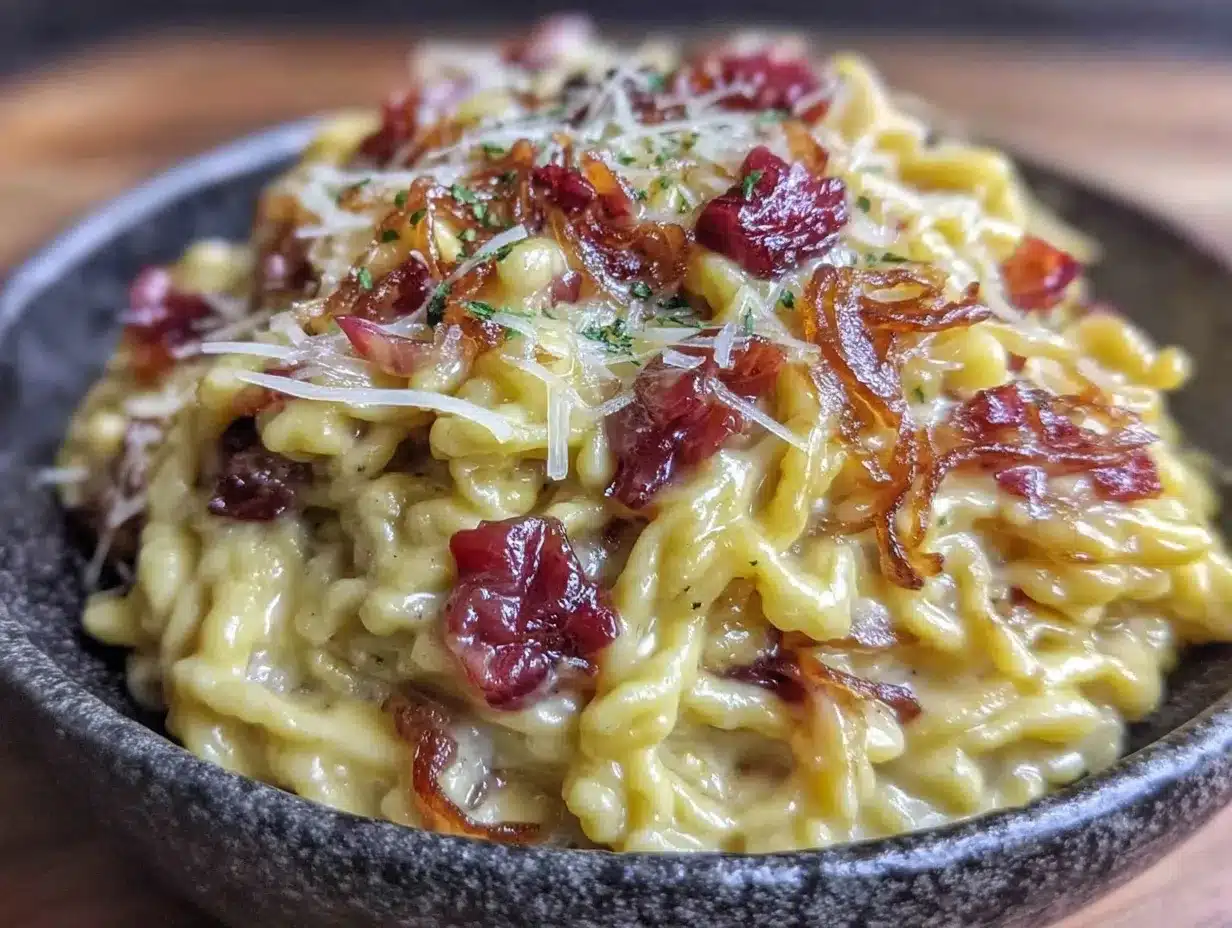
Let’s get cooking. This process is rhythmic and easy once you get the hang of it. Here is exactly how I make it.
Step 1: Make the Batter (5 minutes)
In your medium mixing bowl, whisk together the flour and salt. Make a well in the center. Crack in the two eggs and add 3 tablespoons of milk. Start whisking from the center, gradually pulling in the flour. The batter will be thick at first. Keep whisking and add the remaining milk, one teaspoon at a time, until the batter reaches the consistency of thick pancake batter. It should fall from the whisk in a slow ribbon. If it’s too stiff, add a splash more milk. If it’s too runny, add a teaspoon more flour. Cover and let it rest for 10 minutes. This relaxes the gluten and makes the noodles tender.
Step 2: Boil the Spaetzle (10 minutes)
Fill a medium pot with water and bring it to a rolling boil. Add a generous pinch of salt. While the water heats, have your spaetzle maker or colander ready over the pot. Once the water is boiling, take a handful of batter and press it through the holes into the water. Don’t press too hard, or the noodles will be dense. The spaetzle will sink to the bottom initially. Once they float to the surface, let them cook for another 1-2 minutes. They should be tender but still have a slight chew. Remove them with a slotted spoon and transfer them to a colander to drain. Repeat with the rest of the batter. You’ll have about 2 cups of cooked spaetzle.
Step 3: Sauté Aromatics (2 minutes)
In your 10-inch skillet, melt the butter over medium heat. Add the minced garlic and cook for 30-60 seconds, stirring constantly. You want the garlic to be fragrant but not brown. Browned garlic tastes bitter. If the butter starts to foam too much, reduce the heat slightly.
Step 4: Combine and Melt (3 minutes)
Add the cooked spaetzle to the skillet with the garlic butter. Toss gently to coat every noodle. Sprinkle the grated Gruyère and Parmesan over the top. Reduce the heat to low. Cover the skillet with a lid for 1 minute. This traps the steam and helps the cheese melt evenly. Remove the lid and stir gently. The cheese should be melted and creamy. If it’s not fully melted, cover for another 30 seconds. Taste and add more salt if needed. Garnish with fresh chives and serve immediately.
Total time: 25 minutes. Active time: 15 minutes.
Expert Tips for Perfect Spaetzle
Here’s everything I learned from making this too many times. These tips will save you from common pitfalls.
The Batter Consistency is Key
This is the #1 mistake. If the batter is too thick, the noodles will be doughy. If it’s too thin, they’ll fall apart. Aim for a thick pancake batter consistency. It should drip slowly from a spoon, not pour like water. I’ve had to adjust the milk amount based on humidity, so don’t be afraid to tweak it.
Don’t Skip the Rest
I know it’s tempting to start cooking right away. But letting the batter rest for 10 minutes allows the flour to fully hydrate. This results in a smoother batter and more tender noodles. I learned this the hard way when my first batch was chewy and dense. Never skip this step.
Boil in Batches (If Needed)
If you’re using a smaller pot, don’t overcrowd the water. Cook the spaetzle in two batches if necessary. Overcrowding lowers the water temperature, and the noodles will stick together. Floating is the key indicator that they’re done.
Grate Your Own Cheese
Pre-shredded cheese contains cellulose to prevent clumping. This stops it from melting smoothly. You’ll end up with a grainy sauce. Grating your own cheese takes two minutes and ensures a creamy, velvety texture. It’s worth the effort.
Recipe Variations
Once you’ve nailed the basic version, here’s how to mix it up. This base recipe is incredibly versatile.
Oktoberfest Sausage Spaetzle
Add sliced bratwurst or kielwurst to the skillet with the garlic butter before adding the spaetzle. Sauté until browned. This turns the side dish into a main course. It’s hearty and perfect for cold nights.
Vegetarian Mushroom Spaetzle
Sauté sliced cremini mushrooms with the garlic until they’re golden and their moisture has evaporated. Add the spaetzle and cheese. The umami from the mushrooms pairs beautifully with the Gruyère. It’s earthy and satisfying.
Spicy Jalapeño Spaetzle
Add a diced jalapeño to the butter at the same time as the garlic. Top with crispy bacon bits. The heat cuts through the richness of the cheese. It’s a fun twist that my partner loves.
Dairy-Free Option
Use olive oil instead of butter and a high-quality vegan melting cheese like Violife or Miyoko’s. The texture won’t be exactly the same, but it’s still delicious. I use almond milk if I need extra liquid.
Gluten-Free Spaetzle
Use a 1:1 gluten-free flour blend. Note that GF flour behaves differently, so you may need slightly more liquid. The texture will be softer and less chewy, but it’s still comforting.
Serving & Storage
Serving Suggestions
I serve this as a main course with a simple green salad on the side. The acidity of a vinaigrette cuts through the richness of the cheese. You can also serve it alongside slow-cooker honey garlic chicken thighs for a complete German-inspired meal. If you’re looking for a lighter side, try a watermelon feta salad to balance the heaviness.
Storage
This dish is best eaten fresh. The spaetzle can become gummy if stored and reheated. If you must save leftovers, store them in an airtight container in the fridge for up to 2 days. Reheat gently in a skillet with a splash of milk to loosen them up. Do not microwave, as it will make them rubbery.
Freezing
I don’t recommend freezing this. The cheese sauce will separate, and the texture of the spaetzle will suffer. It’s not worth the risk. Make it fresh when you want it.
Nutrition Information
I’m not a nutritionist, but here’s the breakdown for one serving (half the recipe).
| Nutrient | Amount |
|---|---|
| Calories | 480 |
| Protein | 18g |
| Carbohydrates | 45g |
| Fiber | 2g |
| Fat | 24g |
| Sodium | 650mg |
My Take: This is comfort food with cream and cheese. Not diet food. But it’s better than takeout and I know what’s in it. It’s a treat, so enjoy it without guilt.
Final Thoughts
Finally, a recipe that doesn’t leave you with a week of leftovers you didn’t ask for. This Oktoberfest Cheesy Spaetzle for Two is my testament to the idea that small-batch cooking can be just as satisfying as feeding a crowd. It’s creamy, it’s garlicky, and it’s ready in under 30 minutes. I hope you try it and find it as much of a comfort as I do.
If you make this, drop a comment! I love hearing how it turns out in your kitchen. Do you add sausage? Mushrooms? Let me know your favorite variation. Happy cooking!
FAQs
Can I make this ahead of time?
Not really. Spaetzle are best fresh. The batter can be made ahead and refrigerated for up to 24 hours, but you’ll need to let it come to room temperature and adjust the consistency before cooking. The cooked noodles and cheese sauce should be made just before serving.
Why did my spaetzle fall apart in the water?
Your batter was likely too thin. Spaetzle need a thicker batter to hold their shape. If they’re breaking up, add more flour, a teaspoon at a time, until the batter is stiff enough to hold a shape when dropped.
Can I use a colander instead of a spaetzle maker?
Yes! A large-holed colander works perfectly. You’ll need to press the batter through with a spatula or the back of a spoon. It’s a bit messier, but it yields similar results. Just make sure the holes are large enough for the batter to pass through easily.
What cheese is best for this recipe?
Gruyère is the traditional choice because it melts well and has a nutty flavor. Swiss cheese is a good substitute if you can’t find Gruyère. Avoid cheddar, as it can become oily when melted. A mix of Gruyère and Parmesan is my favorite for flavor depth.
How do I store leftover spaetzle batter?
You can store the batter in an airtight container in the fridge for up to 2 days. Stir it well before using, as it may separate. You might need to add a splash of milk to thin it back out.
Is this recipe gluten-free friendly?
The traditional recipe uses wheat flour. However, you can substitute with a 1:1 gluten-free flour blend. Keep in mind that the texture will be softer and less chewy. You may need to adjust the liquid content slightly.
Can I add vegetables to this?
Absolutely. Sautéed onions, mushrooms, or spinach are great additions. Add them to the skillet before the spaetzle so they’re cooked through and caramelized. This adds bulk and nutrition to the dish.
Pin This Recipe!


Oktoberfest Cheesy Spaetzle for Two
- Total Time: 25 minutes
- Yield: 2 servings 1x
Description
A small-batch, creamy, and garlicky spaetzle recipe scaled perfectly for two people, featuring Gruyère and Parmesan cheese in a one-skillet meal.
Ingredients
- 1 cup (120g) All-Purpose Flour
- 1 tsp Salt (kosher)
- 2 Large Eggs
- 3–4 tbsp Whole Milk
- 2 tbsp Unsalted Butter
- 2 cloves Garlic, minced
- 1/2 cup (50g) Gruyère Cheese, grated
- 1/4 cup (25g) Parmesan Cheese, grated
- 1 tbsp Chives, chopped (for garnish)
Instructions
- In a medium mixing bowl, whisk together the flour and salt. Make a well in the center.
- Crack in the eggs and add 3 tablespoons of milk. Whisk from the center, gradually pulling in the flour.
- Continue whisking and add remaining milk, one teaspoon at a time, until the batter reaches the consistency of thick pancake batter (slow ribbon).
- Cover the batter and let it rest for 10 minutes to relax the gluten.
- Fill a medium pot with water and bring to a rolling boil. Add a generous pinch of salt.
- Press handfuls of batter through a spaetzle maker or large-holed colander into the boiling water.
- Once spaetzle float to the surface, cook for 1-2 minutes until tender but chewy.
- Remove with a slotted spoon and transfer to a colander to drain.
- In a 10-inch skillet, melt butter over medium heat. Add minced garlic and cook for 30-60 seconds until fragrant but not browned.
- Add the cooked spaetzle to the skillet and toss to coat with garlic butter.
- Sprinkle Gruyère and Parmesan cheese over the top. Reduce heat to low.
- Cover the skillet with a lid for 1 minute to trap steam and melt the cheese.
- Remove lid, stir gently until creamy, and garnish with fresh chives. Serve immediately.
Notes
The batter consistency is critical; it should be thick like pancake batter. Do not skip the 10-minute rest time for the batter. Grate your own cheese for better melting. This dish is best eaten fresh and does not freeze well.
- Prep Time: 15 minutes
- Cook Time: 10 minutes
- Category: Main Course
- Cuisine: German
Nutrition
- Serving Size: 1 serving (half the
- Calories: 480
- Sugar: 2
- Sodium: 650
- Fat: 24
- Saturated Fat: 12
- Carbohydrates: 45
- Fiber: 2
- Protein: 18
Keywords: spaetzle, cheesy spaetzle, small batch recipe, comfort food, german noodles, easy dinner, one pan meal, oktoberfest