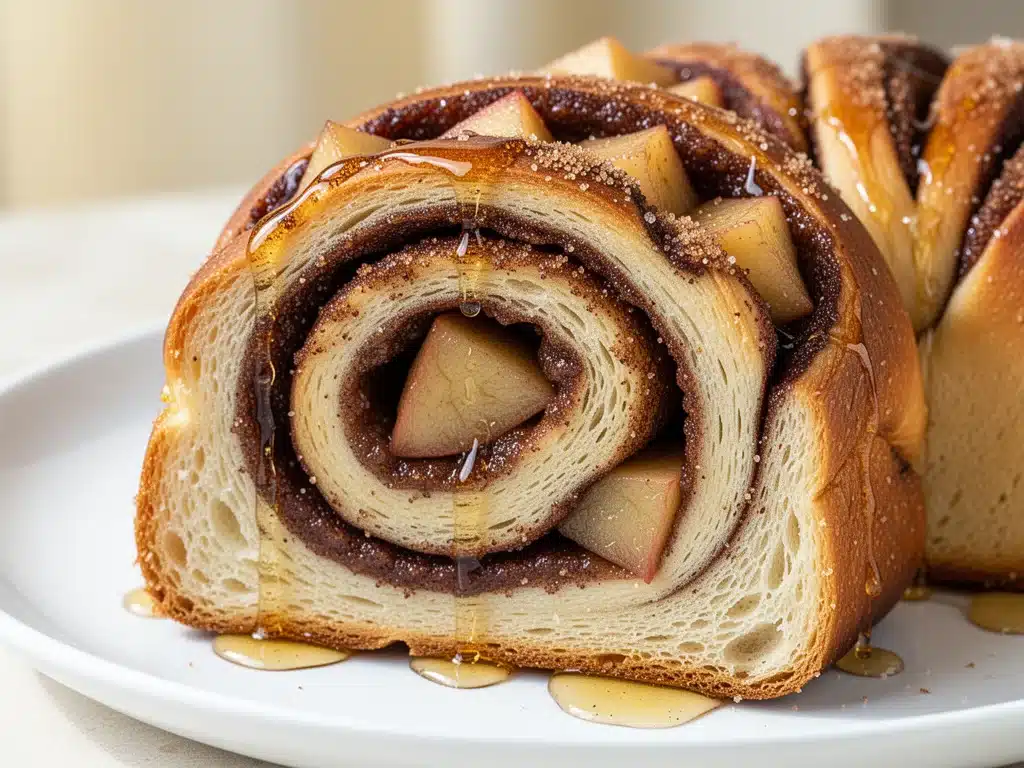
The smell of burnt sugar and warm cinnamon is the scent of my childhood holidays. For as long as I can remember, Rosh Hashanah in my family’s house didn’t just start with the shofar or the apple dipping; it started with bread. Not the usual loaf you’d grab at the grocery store, but something dense, swirled, and dripping with sweetness. It was always babka. Specifically, my grandmother’s apple honey babka.
I have a confession to make. For years, I refused to make babka myself. I thought it was too intimidating. I pictured hours of kneading, complicated braiding techniques, and a final product that looked more like a brick than a beautiful, golden spiral. I bought mine from the local Jewish bakery, expensive and often dry by the afternoon. But last year, I decided enough was enough. I wanted that taste—the soft, cake-like crumb, the sticky honey layers, the tender apples that melt into the dough. I wanted to create that tradition in my own kitchen.
So, I spent three weekends failing. I made dough that was too dense. I made swirls that bled into a muddy mess. I overproofed it until it collapsed. But on the fourth attempt, something clicked. I realized the secret wasn’t in complex techniques, but in patience and the right balance of ingredients. This Apple Honey Babka turned out to be the most tender, flavorful, and surprisingly approachable bread I’ve ever made. It’s not just a holiday treat; it’s a comfort food that tastes like a hug.
If you’ve been intimidated by yeast breads, this is the one to start with. It’s sweet, it’s festive, and it’s perfect for sharing during the High Holidays. I’ve tested this recipe so many times that I can practically bake it in my sleep now. And I promise, once you pull this out of the oven, your home will smell like a dream, and your family will think you’ve been baking babka for decades.
Why You’ll Love This Recipe
There are a few reasons why this Apple Honey Babka has completely taken over my holiday baking routine. It’s not just about the taste, though that’s definitely the main driver. It’s about the experience and the results.
It’s Surprisingly Forgiving — I know, I said I failed a few times. But once you understand the dough, it’s very hard to mess up. It’s a rich, sweet dough that’s soft and pliable. It doesn’t tear easily. It doesn’t demand perfection. If your swirls aren’t pretty, it doesn’t matter. The braiding hides all sins. This is the perfect yeast project for beginners who want to feel like pros.
The Flavor is Unbeatable — We’re talking about sweet, buttery dough layered with spiced apples and sticky honey. It’s like eating a cinnamon roll, but more sophisticated. The honey in the dough and the glaze adds a floral depth that sugar just can’t match. It’s not cloyingly sweet, either. It’s balanced, warm, and aromatic.
It’s a Make-Ahead Dream — Rosh Hashanah can be stressful. You’re hosting, cooking, cleaning. This babka allows you to do the heavy lifting the night before. You can assemble it, let it rise overnight in the fridge, and then pop it in the oven in the morning. The smell will wake up the whole house. It’s the ultimate stress-buster for holiday mornings.
It Freezes Like a Champ — Unlike some delicate pastries, babka actually gets better after a day or two. And it freezes beautifully. I often make two loaves—one for the holiday and one for the freezer. When I need a pick-me-up in February, I pull one out, thaw it, and warm it up. It tastes fresh-baked every time.
It’s Perfect for Gifting — During the holidays, we exchange gifts. This babka is a gorgeous, impressive gift that shows you put in real effort. Wrap it in cellophane with a ribbon, and you’ve got a thoughtful, delicious present that everyone will appreciate. It’s better than store-bought cookies any day.
Basically, this recipe is my go-to when I want to impress without stressing. It’s reliable, delicious, and deeply connected to tradition. If you’re looking for a way to bring warmth and sweetness to your Rosh Hashanah table, this is it.
Ingredients You’ll Need
One thing I love about this Apple Honey Babka is that the ingredients are simple. You don’t need anything obscure or hard to find. Most of this is standard pantry stuff, with a few special items that make all the difference.
For the Dough
Bread flour (4 cups / 500g) — I prefer bread flour because it has more protein, which gives the babka that nice, chewy structure. All-purpose flour works too, but the texture will be a bit softer, more like a brioche. If you use all-purpose, be careful not to overmix.
Active dry yeast (2 packets / 2 ¼ tsp) — Standard packet size. Make sure it’s fresh! If your yeast is old, your dough won’t rise, and you’ll end up with a dense brick. I like to proof it in the warm milk first to check if it’s alive.
Whole milk (1 cup / 240ml) — Warm, not hot. You want it around 110°F (43°C). If it’s too hot, it’ll kill the yeast. If it’s too cold, the yeast won’t activate. Lukewarm is the sweet spot.
Honey (½ cup / 170g) — This goes into the dough. It feeds the yeast and adds that signature honey flavor. I use clover honey, but any mild honey works. Avoid strong-flavored honey like buckwheat, as it might overpower the delicate taste.
Unsalted butter (½ cup / 113g, softened) — Room temperature butter is key here. It needs to cream easily into the dough. If it’s too cold, it’ll be lumpy. If it’s melted, it’ll make the dough greasy.
Eggs (2 large, plus 1 for egg wash) — Eggs add richness and structure. Room temperature eggs incorporate better into the dough. The extra egg is for brushing on top before baking to get that golden shine.
Salt (1 teaspoon) — Essential for balancing the sweetness. Don’t skip it.
Vanilla extract (1 teaspoon) — Just a touch to enhance the other flavors.
For the Filling
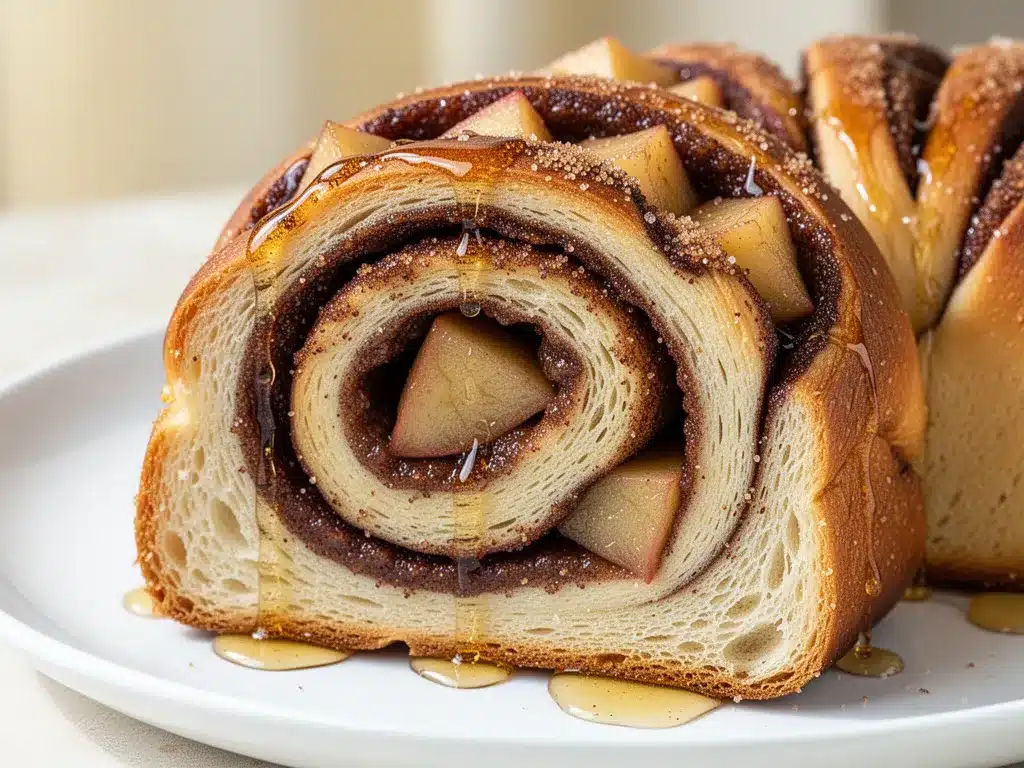
Apples (3 medium, peeled and diced) — I use a mix of Granny Smith and Honeycrisp. Granny Smith holds its shape and adds tartness, while Honeycrisp adds sweetness and softness. You want small, even cubes, about ½ inch. Too big, and they won’t cook through.
Butter (¼ cup / 57g, melted) — For brushing the dough before adding the apples.
Sugar (½ cup / 100g) — Granulated white sugar. You can use brown sugar for a deeper flavor, but white keeps the classic look.
Cinnamon (2 teaspoons) — The star of the show. Use good quality cinnamon. If your spice jar has been sitting since last year, it’s time to buy new. It makes a huge difference.
Nutmeg (¼ teaspoon) — Just a pinch. It adds warmth without being noticeable on its own.
For the Honey Glaze
Honey (¼ cup / 85g) — Drizzled over the warm babka after baking.
Water (2 tablespoons) — To thin out the honey so it drizzles easily.
Lemon juice (1 teaspoon) — A little acidity to cut the sweetness. Optional, but I recommend it.
Pro Tip: I always measure my flour by spooning it into the cup and leveling it off, rather than scooping directly. Scooping packs the flour down, and you end up with too much, leading to a dry dough. It’s a small habit that saves big headaches.
Equipment Needed
You don’t need a fancy kitchen to make this babka. Here’s what I actually use, along with some alternatives if you don’t have everything.
Large mixing bowl — I use a 6-quart bowl. It needs to be big enough to accommodate the dough as it doubles in size. If your bowl is too small, the dough will spill over when it rises.
Stand mixer with dough hook — This is my favorite tool. It does the heavy lifting for me. I can knead the dough for 8-10 minutes without breaking a sweat. If you don’t have one, you can knead by hand, but it will take 15-20 minutes of elbow grease.
Small saucepan — For heating the milk and making the glaze. Any small pot works.
Measuring cups and spoons — Standard stuff. I use a digital scale for flour if I want to be precise, but volume measurements work fine if you’re careful.
9×5 inch loaf pans — I make two smaller loaves, which is perfect for sharing. You can also make one large loaf in a 10×5 pan, but the cooking time will be longer. Two loaves bake more evenly.
Parchment paper — For lining the pans. It prevents sticking and makes cleanup a breeze. I never bake babka without it.
Pastry brush — For brushing the melted butter and egg wash. A silicone brush is easy to clean and works great.
Wire cooling rack — Essential for letting the babka cool completely. If you cut it while it’s hot, the inside will be gummy. Patience is key here.
Optional but nice:
– Dough scraper — Helps clean the bowl and handle sticky dough.
– Instant-read thermometer — For checking the milk temperature. If you don’t have one, just test it on your wrist—it should feel warm, like a baby’s bath.
Real talk: You don’t need a stand mixer. I’ve made this by hand many times. But if you have one, use it. It saves your arms and ensures the dough is kneaded evenly.
How to Make It: Step-by-Step
Alright, let’s make this! I’m walking you through exactly how I do it, including the little tricks I’ve picked up over the years. This process takes about 3 hours total, but most of that is waiting. The active work is pretty minimal.
Step 1: Proof the Yeast (5 minutes)
Start by warming your milk in a small saucepan over medium-low heat. You want it to reach about 110°F (43°C). If you don’t have a thermometer, heat it until it’s warm to the touch but not hot. Pour it into a small bowl and sprinkle the yeast and 1 teaspoon of the honey from the recipe over it. Stir gently and let it sit for 5-10 minutes. You’re looking for a foamy, bubbly layer on top. If it doesn’t foam, your yeast is dead. Throw it out and start over with fresh yeast. This step ensures your bread will rise.
Step 2: Mix the Dough (10 minutes)
In the bowl of a stand mixer fitted with a dough hook, combine the flour, salt, remaining honey, vanilla, and softened butter. Add the proofed yeast mixture and the 2 eggs. Mix on low speed for 2 minutes until the ingredients are combined. Then, increase to medium speed and knead for 8-10 minutes. The dough should be smooth, elastic, and slightly tacky but not sticky. If it’s too sticky, add a tablespoon of flour at a time. If it’s too dry, add a tablespoon of water. The dough should pass the “windowpane test”—stretch a small piece thin enough to see light through it without tearing.
Step 3: First Rise (1.5 hours)
Transfer the dough to a lightly oiled bowl. Cover it with plastic wrap or a damp kitchen towel. Let it rise in a warm, draft-free place for 1.5 to 2 hours, or until it has doubled in size. I usually turn on my oven light to create a warm environment. Don’t rush this step. The dough needs time to develop flavor and structure.
Step 4: Prepare the Filling (10 minutes)
While the dough rises, prep your apples. Peel them, remove the cores, and dice them into ½-inch cubes. Toss them with a little lemon juice to prevent browning. In a small bowl, mix the sugar, cinnamon, and nutmeg. Set aside. You want the filling ready to go before you start assembling.
Step 5: Assemble the Babka (15 minutes)
Punch down the risen dough and divide it in half. On a lightly floured surface, roll each half into a rectangle, about 12×16 inches. Brush each rectangle with melted butter. Sprinkle the cinnamon-sugar mixture evenly over the butter, leaving a 1-inch border at the far edge. Scatter the diced apples over the sugar layer. Starting from the long edge, roll the dough up tightly into a log. Pinch the seam to seal.
Now, the braiding. Cut each log in half lengthwise. You’ll have two long strands with the filling exposed. Twist the two strands together tightly, then fold the twist in half and tuck the ends under. Place the twisted dough into the prepared loaf pans, seam-side down. This creates that beautiful spiral look.
Step 6: Second Rise (45 minutes)
Cover the pans again and let the babka rise for another 45 minutes. It should puff up and rise about an inch above the rim of the pan. This is the final proof. If you press it gently, it should spring back slowly. If it springs back quickly, it needs more time.
Step 7: Bake (35-40 minutes)
Preheat your oven to 350°F (175°C). Brush the tops of the babka with the beaten egg. Bake for 35-40 minutes, or until the tops are deep golden brown and the internal temperature reaches 190°F (88°C). If the tops are browning too quickly, tent them with foil. The babka should sound hollow when tapped on the bottom.
Step 8: Glaze and Cool (30 minutes)
While the babka bakes, heat the honey and water in a small saucepan until the honey dissolves. Stir in the lemon juice. As soon as the babka comes out of the oven, brush the hot glaze over the tops. This creates that sticky, sweet coating. Let the babka cool in the pans for 10 minutes, then transfer to a wire rack to cool completely. I know it’s tempting to cut it immediately, but wait. The inside needs to set.
Expert Tips & Tricks
Here’s everything I’ve learned from making this dozens of times. These tips will save you from my mistakes.
Temperature is Everything
Yeast is finicky. Too hot, and it dies. Too cold, and it sleeps. Use an instant-read thermometer for the milk. It’s the most reliable way to get consistent results. Also, keep your dough in a warm place for rising. A cold kitchen will double your rising time.
Don’t Overfill the Loaves
When assembling, don’t overload the apples. If there’s too much filling, the babka will fall apart during baking. A moderate amount of apples ensures the structure holds, and you still get plenty of flavor in every bite.
The Glaze Goes On Hot
Apply the honey glaze immediately after baking. The heat of the babka helps the glaze absorb slightly and creates a shiny, sticky finish. If you wait until it’s cool, the glaze will just sit on top and might slide off.
Storage is Simple
Once completely cool, wrap the babka tightly in plastic wrap and then foil. It will keep at room temperature for 2 days. For longer storage, freeze it for up to 3 months. Thaw overnight in the fridge or at room temperature.
Common Mistake: Dense Babka
If your babka turns out dense, you likely over-kneaded the dough or used old yeast. Knead just until smooth. And always proof your yeast first to ensure it’s active.
Pro Trick: Egg Wash Shine
For an extra-glossy top, add a drop of milk to your egg wash. This helps it brown evenly and look professional. It’s a small detail that makes a big visual difference.
Variations & Substitutions
Once you’ve nailed the basic version, here’s how you can mix it up. I’ve tried all of these.
Chocolate Chip Babka
Skip the apples and cinnamon sugar. Instead, spread chocolate chips over the buttered dough before rolling. It’s like a dessert babka. My kids love this version.
Pecan Praline Babka
Replace the apples with chopped pecans and a mixture of brown sugar and butter. It’s richer and crunchier. Great for Thanksgiving too.
Cardamom Apple
Swap the cinnamon for ground cardamom. It adds a floral, aromatic twist that’s very Scandinavian. Delicious with coffee.
Gluten-Free
You can use a 1:1 gluten-free flour blend. The dough will be stickier, so you might need more flour. The texture will be more cake-like, but it still tastes great.
Dairy-Free
Use coconut milk instead of dairy milk and coconut oil instead of butter. The flavor will be slightly different, but still delicious. For the glaze, use maple syrup instead of honey.
Lower Sugar
Reduce the sugar in the filling by half and use less honey in the glaze. It’s still sweet from the apples, so it works.
Serving & Storage
How to Serve:
I serve this babka warm, sliced thick. It’s perfect with a cup of tea or coffee. For Rosh Hashanah, I often serve it alongside honey for dipping, continuing the tradition of sweetening the new year.
Side Dishes:
This is a sweet bread, so it doesn’t need savory sides. But it pairs well with a simple green salad if you’re having a large brunch. Or serve it with honey lavender iced latte for a festive drink.
Toppings Bar:
When I have guests, I put out extra honey, whipped cream, and fresh berries. Everyone can customize their slice.
Storage Instructions:
Store in an airtight container at room temperature for up to 2 days. For longer storage, freeze in slices. Wrap tightly in plastic and foil. Thaw at room temperature. Do not refrigerate, as it will dry out the bread.
Reheating:
To refresh, wrap the babka in foil and warm in a 300°F oven for 10 minutes. Or microwave a slice for 20 seconds. It will taste almost fresh-baked.
Nutrition Information
I’m not a nutritionist, but here’s the breakdown if you’re tracking. This is a rich, sweet bread, so enjoy in moderation.
Per Serving (based on 12 slices):
– Calories: 280
– Protein: 5g
– Carbs: 45g
– Fiber: 2g
– Sugar: 22g
– Fat: 8g
– Saturated Fat: 4g
– Cholesterol: 35mg
– Sodium: 180mg
What’s Good:
– Contains whole grain flour if you use 100% whole wheat
– Apples add some fiber and vitamins
– Honey has antioxidants
What to Know:
– High in sugar and carbs
– Contains gluten and dairy
– Moderate calories
My Take:
Look, this is a treat. It’s not a health food. But it’s better than store-bought pastries, and you control the ingredients. When I make it, I use real honey and fresh apples. It’s a special occasion bread, and that’s okay. Enjoy it with gratitude and a smile.
Final Thoughts
So that’s my Apple Honey Babka! I’ve probably talked your ear off at this point, but when you make a recipe this often, you have a lot to say about it.
This has saved my Rosh Hashanah celebrations more times than I can count. It’s my answer to “what’s for dessert” when I want something traditional but impressive. My family is happy, my guests are happy, and I’m happy because I finally mastered this recipe.
Make it yours! Try different apples, swap the spices, or add nuts. The best recipes are the ones you adapt to your family’s tastes. And if you make this, drop a comment and let me know what you think! I love hearing how recipes turn out in your kitchen.
Happy cooking! And I hope your kitchen smells half as good as mine does right now.
Frequently Asked Questions
Can I use all-purpose flour instead of bread flour?
Yes, you can. The texture will be softer and more bread-like, less chewy. If you use all-purpose, be careful not to add too much flour during kneading, as it can make the dough dry. The result is still delicious, just slightly different.
Why did my babka collapse after baking?
This usually happens if the dough was over-proofed. If the dough rises too much before baking, the structure can’t support it, and it collapses in the oven. Make sure you bake it as soon as it reaches the right size—doubled, not tripled.
Can I make this ahead for a dinner party?
Absolutely. You can assemble the babka, let it rise overnight in the fridge, and then bake it in the morning. This is actually my preferred method because it reduces morning stress. Just let it come to room temperature for 30 minutes before baking.
Can I freeze the babka?
Yes, it freezes very well. Wrap it tightly in plastic wrap and then foil. It will keep for up to 3 months. Thaw it at room temperature or gently warm it in the oven. It tastes fresh-baked after thawing.
What kind of apples work best?
I recommend a mix of tart and sweet apples. Granny Smith provides structure and tartness, while Honeycrisp or Fuji add sweetness and softness. Avoid apples that turn to mush easily, like Red Delicious.
Can I use maple syrup instead of honey?
You can, but the flavor will be different. Maple syrup has a stronger taste. It works well in the glaze, but in the dough, honey is better for feeding the yeast. If you substitute, use an equal amount of maple syrup.
How do I know when the babka is done?
The top should be deep golden brown. You can also tap the bottom—it should sound hollow. For precision, use a thermometer. The internal temperature should reach 190°F (88°C).
Pin This Recipe!
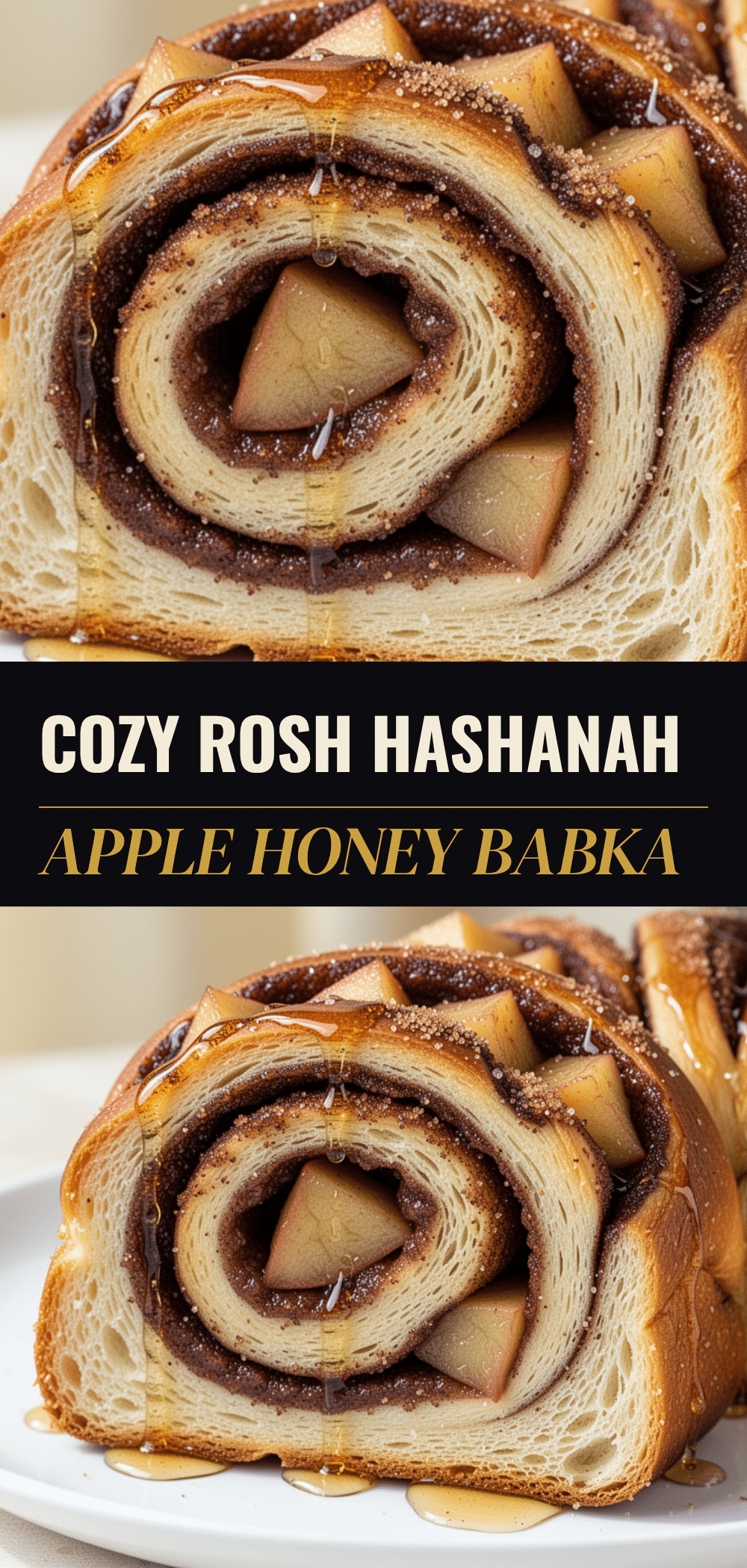
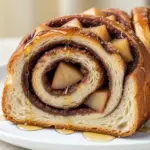
Apple Honey Babka: Easy Rosh Hashanah Recipe
- Total Time: 3 hours
- Yield: 2 loaves (12 slices per loaf) 1x
Description
A tender, sweet yeast bread layered with spiced apples and sticky honey, perfect for Rosh Hashanah or any festive occasion. This forgiving recipe yields a beautiful golden spiral loaf that is surprisingly approachable for beginners.
Ingredients
- 4 cups (500g) bread flour
- 2 packets (2 ¼ tsp) active dry yeast
- 1 cup (240ml) whole milk, warmed to 110°F
- ½ cup (170g) honey, divided
- ½ cup (113g) unsalted butter, softened
- 2 large eggs, plus 1 for egg wash
- 1 teaspoon salt
- 1 teaspoon vanilla extract
- 3 medium apples (Granny Smith and Honeycrisp mix), peeled and diced
- ¼ cup (57g) unsalted butter, melted
- ½ cup (100g) granulated sugar
- 2 teaspoons cinnamon
- ¼ teaspoon nutmeg
- ¼ cup (85g) honey (for glaze)
- 2 tablespoons water (for glaze)
- 1 teaspoon lemon juice (for glaze)
Instructions
- Proof the yeast: Warm milk to 110°F. In a small bowl, combine milk, yeast, and 1 teaspoon of honey. Let sit for 5-10 minutes until foamy.
- Mix the dough: In a stand mixer with a dough hook, combine flour, salt, remaining honey, vanilla, and softened butter. Add the yeast mixture and 2 eggs. Mix on low for 2 minutes, then knead on medium for 8-10 minutes until smooth and elastic.
- First Rise: Transfer dough to an oiled bowl, cover, and let rise in a warm place for 1.5 to 2 hours until doubled in size.
- Prepare filling: While dough rises, dice apples and toss with a little lemon juice. Mix sugar, cinnamon, and nutmeg in a small bowl.
- Assemble: Punch down dough and divide in half. Roll each half into a 12×16 inch rectangle. Brush with melted butter, sprinkle with cinnamon-sugar mixture, and scatter diced apples over the top. Roll tightly into a log and pinch seam to seal.
- Braid: Cut each log in half lengthwise. Twist the two strands together, fold in half, and tuck ends under. Place into prepared 9×5 inch loaf pans, seam-side down.
- Second Rise: Cover pans and let rise for 45 minutes until puffed and about an inch above the rim.
- Bake: Preheat oven to 350°F (175°C). Brush tops with beaten egg. Bake for 35-40 minutes until deep golden brown and internal temperature reaches 190°F.
- Glaze and Cool: While baking, heat honey and water until dissolved, then stir in lemon juice. Brush glaze over hot babka immediately after removing from oven. Cool in pans for 10 minutes, then transfer to a wire rack to cool completely.
Notes
Ensure milk is not too hot (110°F) to avoid killing the yeast. Measure flour by spooning into the cup and leveling off to prevent dry dough. The babka can be assembled and risen overnight in the fridge for make-ahead convenience. Store in an airtight container at room temperature for 2 days or freeze for up to 3 months.
- Prep Time: 45 minutes
- Cook Time: 40 minutes
- Category: Dessert
- Cuisine: Jewish
Nutrition
- Serving Size: 1 slice
- Calories: 280
- Sugar: 22
- Sodium: 180
- Fat: 8
- Saturated Fat: 4
- Carbohydrates: 45
- Fiber: 2
- Protein: 5
Keywords: Rosh Hashanah, babka, apple honey bread, holiday baking, yeast bread, sweet bread, Jewish holiday recipes