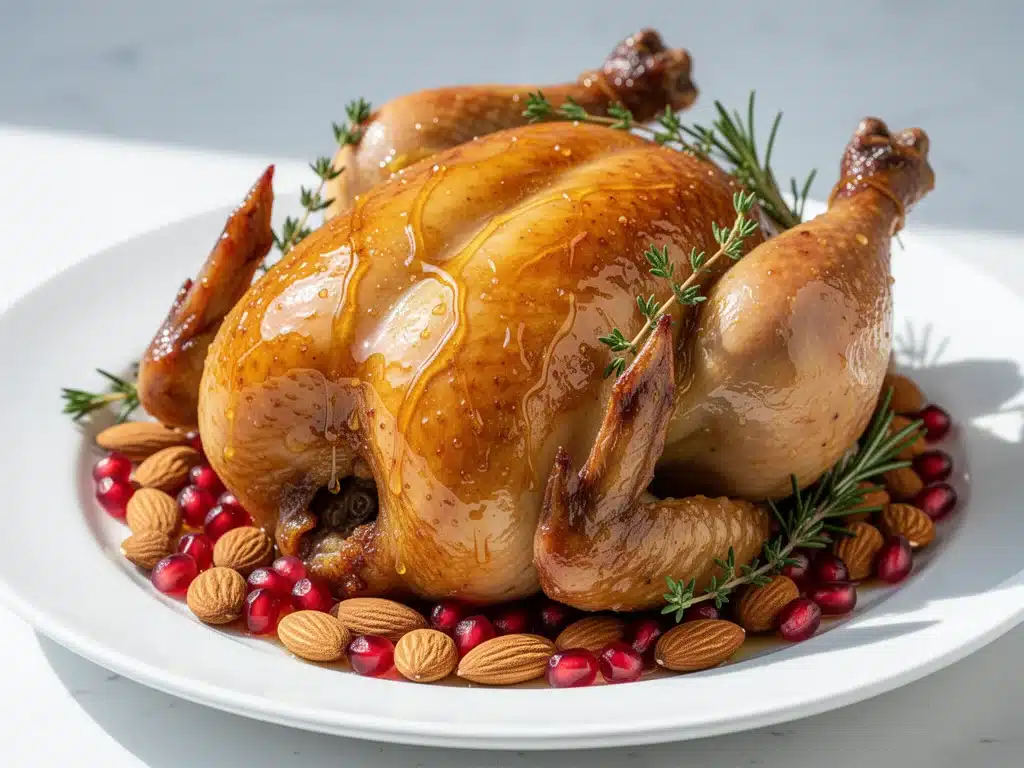
There is a specific kind of anxiety that comes with hosting Rosh Hashanah for the first time. It’s not just about feeding people; it’s about setting the tone for the entire year. You want the food to scream “sweet new year,” but you also need it to taste like comfort, not just a sugar rush. Last year, I made the mistake of going too heavy on the dessert and leaving the main course feeling like an afterthought. My in-laws were polite, but I could see them eyeing the leftover challah with more enthusiasm than the roast chicken.
That was the year I decided to stop playing it safe. I wanted a centerpiece that was elegant enough for a holiday dinner but simple enough that I wasn’t hiding in the kitchen while everyone else was enjoying the table. Enter this Rosh Hashanah Honey Glazed Roast Chicken. It’s not just a bird; it’s a promise of a sweet, prosperous year, wrapped in crispy, golden skin and juicy, herb-infused meat.
I’ve tested this recipe through three different years of hosting, tweaking the glaze ratios and roasting times until it became foolproof. The result is a chicken that is deeply flavorful, effortlessly impressive, and actually easy to pull off even if you’re stressed. It’s the kind of dish that makes people lean in and ask for the recipe before they’ve even finished their first bite. If you’re looking for a holiday dinner that balances tradition with real, kitchen-tested flavor, this is it.
Why You’ll Love This Holiday Chicken
This recipe has completely changed how I approach holiday cooking. It’s not about complicated techniques or obscure ingredients. It’s about maximizing flavor with things you already have. Here’s why this Rosh Hashanah Honey Glazed Roast Chicken keeps me coming back:
- It’s Sweet Without Being Cloying — The glaze hits that perfect balance of honey sweetness and savory depth from the garlic and herbs. It’s symbolic for the new year without turning the chicken into a dessert. My kids, who usually pick the skin off, actually ate the glaze this year.
- Crispy Skin, Every Single Time — I’ve learned the hard way that air-drying the bird is non-negotiable. This method guarantees that shatteringly crisp skin, which is honestly the best part. No soggy bottoms here.
- Hands-Off Cooking — Once this is in the oven, you’re free. I spend about 20 minutes prepping and maybe 10 minutes basting. The rest is just waiting for the smell to fill the house. It’s perfect for hosting because you’re not chained to the stove.
- Make-Ahead Friendly — You can brine or dry-brine the chicken the night before. This means your morning of the holiday is just about glazing and roasting. Less morning stress, more time with family.
- Leftovers That Actually Taste Good — We used leftover roast chicken in my slow cooker honey garlic chicken thighs later in the week, and it was even better. The flavors deepen over time.
This is my go-to when I need dinner to just work. No complicated techniques, no weird ingredients, just reliable, delicious food that makes everyone happy and sets a beautiful tone for the holidays.
Ingredients You’ll Need
Here’s the best part: you probably have most of this already in your pantry. I’m particular about a few things here, and I’ll tell you exactly why they matter for getting that perfect holiday flavor.
For the Chicken
Whole roasting chicken (4-5 pounds / 1.8-2.3 kg) — Get a chicken that’s not too big, or it’ll dry out. I prefer a pasture-raised bird if I can find one, but standard store-bought works fine. Make sure it’s fully thawed if you’re using frozen.
Kosher salt (2 tablespoons) — This is crucial. Kosher salt has larger flakes that penetrate the meat better than table salt. If you’re dry-brining (which I highly recommend), this is your main seasoning tool.
Black pepper (1 teaspoon, freshly cracked) — Just enough to add a little heat without overpowering the honey. Freshly cracked makes a huge difference in aroma.
For the Honey Glaze
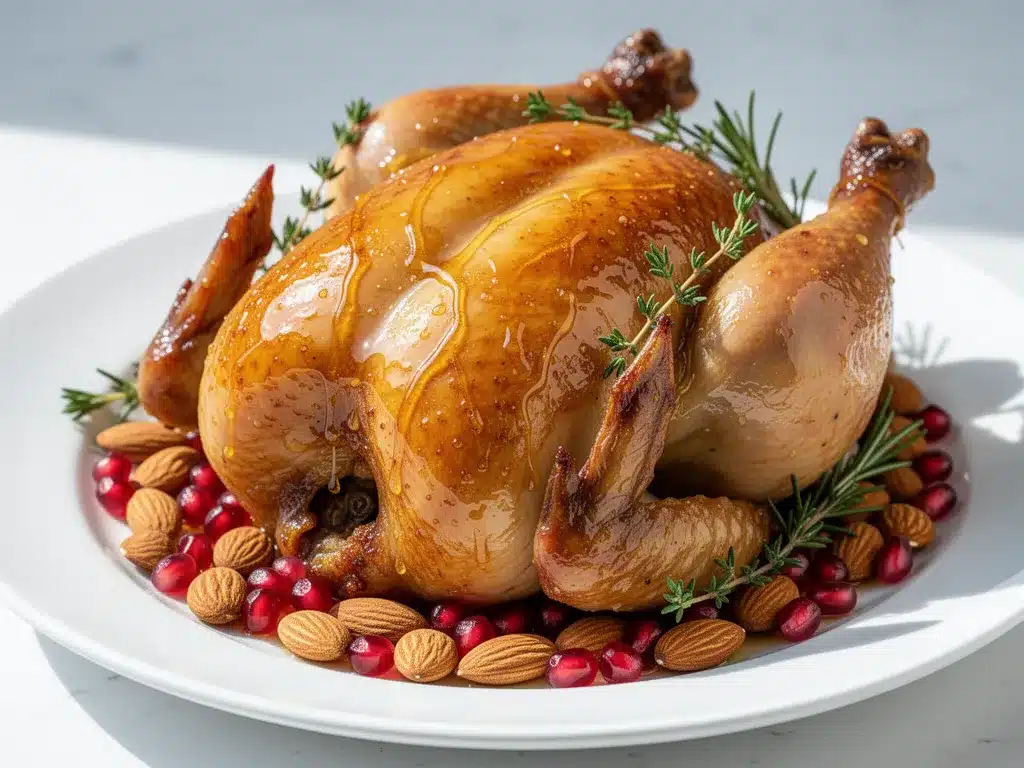
Honey (½ cup / 120ml) — Use a good quality, neutral honey. Clover or wildflower works well. Avoid strongly flavored honeys like buckwheat, which might clash with the herbs.
Extra virgin olive oil (3 tablespoons / 45ml) — This helps the glaze adhere and promotes browning. Don’t skimp on the oil; it’s what gives the skin that glossy, restaurant-quality finish.
Garlic (6 cloves, minced / about 2 tablespoons) — Yes, six cloves. Don’t skimp. Fresh only—no jarred garlic in this recipe. The flavor needs to be bright and pungent to cut through the sweetness.
Dijon mustard (1 tablespoon) — This is the secret weapon. It adds tang and helps emulsify the glaze so it doesn’t just slide off the bird. It also helps the honey caramelize evenly.
Fresh thyme (2 tablespoons, leaves stripped) — Thyme is the classic partner for chicken and honey. It’s earthy and subtle. If you don’t have fresh, use 1 tablespoon dried, but fresh is better.
Fresh rosemary (1 tablespoon, chopped) — Adds a piney, robust note. Chop it finely so you don’t get big woody sprigs in your mouth.
For the Roasting Pan
Lemon (1 large, halved) — Stuff the cavity with this. It steams the chicken from the inside, keeping it moist and adding a subtle citrus background note.
Onion (1 large, quartered) — Same as the lemon. It creates a flavorful bed for the chicken and infuses the meat with sweetness as it roasts.
Carrots and celery (2 cups, roughly chopped) — Optional, but I love having roasted vegetables at the bottom of the pan to scoop up all those drippings. They become sweet and caramelized.
Equipment Needed
You don’t need fancy equipment for this. Here’s what I actually use.
Roasting pan with rack — I use a 13×9 inch metal roasting pan. The rack is important because it lifts the chicken off the bottom, allowing air to circulate and keeping the skin crispy. If you don’t have a rack, you can use the chopped vegetables as a makeshift rack.
Large baking sheet — Sometimes I roast the chicken on a sheet pan if my roasting pan is too small. It works fine, just make sure you have room for the juices to bubble around.
Meat thermometer — This is non-negotiable. I learned this the hard way with a dry, gray chicken in my 20s. An instant-read thermometer takes the guesswork out. Look for 165°F (74°C) in the thickest part of the thigh.
Basting brush — Silicone brushes are easiest for sticky honey glaze. A pastry brush works too, but it’s harder to clean.
Sharp knife and cutting board — For chopping the aromatics and carving the chicken later. A dull knife makes you cry more—learned this the hard way.
Small saucepan — For melting the honey and mixing the glaze. Or just use a microwave-safe bowl if you’re in a hurry.
How to Make It: Step-by-Step
Alright, let’s make this! I’m walking you through exactly how I do it, including the little tricks I’ve picked up over the years.
Step 1: Prep the Chicken (10 minutes)
Take your chicken out of the fridge and pat it completely dry with paper towels. This is the most important step for crispy skin. Remove the neck and giblets from the cavity. If you’re dry-brining, rub the kosher salt all over the chicken, inside and out, and leave it uncovered in the fridge overnight. If you’re short on time, just salt it well right before roasting.
Step 2: Make the Glaze (5 minutes)
In a small saucepan over low heat, combine the honey, olive oil, minced garlic, Dijon mustard, thyme, and rosemary. Warm it gently just until the honey is liquid and everything is combined. Do not boil it, or the honey might burn. Stir until smooth and set aside to cool slightly.
Step 3: Prepare the Pan (5 minutes)
Preheat your oven to 425°F (220°C). Stuff the chicken cavity with the lemon halves and onion quarters. Tie the legs together with kitchen twine if you want it to look neat, but it’s not strictly necessary. Place the chicken on a rack in your roasting pan. If you’re using carrots and celery, scatter them around the base of the pan.
Step 4: First Roast (30 minutes)
Roast the chicken uncovered for 30 minutes. This high heat helps start the browning process and crisps up the skin. You’ll start to smell the herbs and honey getting warm in the oven.
Step 5: Glaze and Continue Roasting (30-40 minutes)
Remove the pan from the oven. Brush the chicken generously with half of the honey glaze. Make sure to get under the wings and along the back. Return to the oven and roast for another 30-40 minutes. Halfway through, baste with the remaining glaze. The skin should be deep golden brown and caramelized.
Step 6: Check Temperature (2 minutes)
Insert your meat thermometer into the thickest part of the thigh, avoiding the bone. It should read 165°F (74°C). If it’s not there yet, roast for another 5-10 minutes and check again. Don’t overcook it, or the meat will dry out.
Step 7: Rest the Chicken (15-20 minutes)
This is the hardest part. Remove the chicken from the oven and transfer it to a cutting board or platter. Tent it loosely with foil and let it rest for at least 15 minutes. This allows the juices to redistribute. If you cut into it immediately, all the good stuff runs out onto the board.
Total Time: About 1 hour 45 minutes (plus resting time). Active time is about 20 minutes.
Expert Tips & Tricks
Here’s everything I’ve learned from making this dozens of times. These tips will save you from my mistakes.
Don’t Skip the Dry-Brine
If you have time, salt the chicken 12-24 hours before roasting and leave it uncovered in the fridge. This draws out moisture, which then gets reabsorbed with the salt, seasoning the meat deeply and drying out the skin for maximum crispiness. It’s a game-changer.
Glaze at the Right Time
Don’t glaze the chicken at the very beginning. The sugar in the honey will burn before the chicken is cooked through. Glazing halfway through the roast ensures a beautiful, caramelized finish without charred bits.
Use a Thermometer
I know, I know, it’s not glamorous. But it’s the only way to guarantee juicy meat. Pull the chicken at 160°F (71°C); the residual heat will carry it to 165°F while it rests.
Save the Drippings
Don’t throw away those vegetables and juices in the pan. Strain them, skim off the fat, and use it to make a quick pan sauce or gravy. It’s liquid gold.
Variations & Substitutions
Once you’ve nailed the basic version, here’s how you can mix it up. I’ve tried all of these.
Spicy Honey Glaze
Add a teaspoon of red pepper flakes or a dash of hot sauce to the glaze. It adds a nice kick that balances the sweetness. Great for those who like a little heat.
Lemon-Herb Version
Skip the rosemary and add more thyme and oregano. Add the zest of one lemon to the glaze for a brighter, more citrus-forward flavor. This pairs beautifully with the crispy parmesan crusted chicken cutlets style of flavor profile.
Veggie-Laden Pan
Add potatoes, sweet potatoes, or Brussels sprouts to the roasting pan. Toss them in olive oil and salt, and they’ll roast alongside the chicken, absorbing all the honey and herb flavors. One pan, less cleanup.
Gluten-Free
This recipe is naturally gluten-free, just make sure your Dijon mustard and honey are certified gluten-free if you have celiac disease. Most are, but it’s good to check.
Serving & Storage
How to Serve:
I usually serve this straight from the cutting board at the dinner table—it looks rustic and stays warm. But here are other ways I’ve enjoyed it:
- With Gravy — Make a quick pan sauce with the drippings and some chicken broth.
- With Roasted Veggies — The carrots and onions from the pan are sweet and tender.
- With Challah — Can’t have Rosh Hashanah without it. Soak up the juices.
Storage Instructions:
Refrigerator: Store leftovers in an airtight container for up to 4 days. The skin will soften, but the meat stays juicy.
Reheating: Best method: Reheat in a 350°F oven for 15-20 minutes to crisp up the skin. Microwave works but makes the skin chewy. Add a splash of broth if the meat seems dry.
Freezing: You can freeze the cooked chicken, but the texture might change slightly. Wrap tightly in foil and freezer bags. Thaw in the fridge overnight and reheat gently.
Nutrition Information
I’m not a nutritionist, but here’s the breakdown if you’re tracking. Per serving (based on 8 servings, including skin and glaze):
| Nutrient | Amount |
|---|---|
| Calories | 380 |
| Protein | 35g |
| Carbs | 12g |
| Fat | 22g |
| Sugar | 10g |
| Sodium | 450mg |
What’s Good: High protein, relatively low carb if you skip the veggies with starch.
What to Know: Higher in fat from the skin and honey. Use this as a treat, not every day.
My Take: Look, this is holiday food. It’s meant to be special. Enjoy it. When I want to make it lighter, I remove the skin before eating and skip the extra glaze. But usually? I just enjoy a reasonable portion and savor the moment.
Final Thoughts
So that’s my Rosh Hashanah Honey Glazed Roast Chicken! I’ve probably talked your ear off at this point, but when you make a recipe this often, you have a lot to say about it.
This has saved my holiday dinners more times than I can count. It’s my answer to “what’s for dinner” when I want something that feels festive and meaningful but doesn’t require a degree in culinary arts. My family is happy, my guests are impressed, and I’m happy because I’m not stressed about cooking.
Make it yours! Try different herbs, add some spices, adjust the honey. The best recipes are the ones you adapt to your family’s tastes. If you make this, drop a comment and let me know what you think! I love hearing how recipes turn out in your kitchen.
Happy cooking! And I hope your kitchen smells half as good as mine does right now.
Frequently Asked Questions
Can I use a different sweetener instead of honey?
You can, but honey is traditional for Rosh Hashanah for a reason—it symbolizes a sweet new year. Maple syrup works in a pinch, but it has a stronger flavor that might clash with the herbs. Agave nectar is too mild. I’d stick with honey for the best flavor and symbolism.
Why did my chicken skin turn out soggy?
Usually, this means the chicken wasn’t dry enough before roasting, or it wasn’t roasted at a high enough temperature. Make sure you pat it thoroughly dry, and don’t cover it while it roasts. The high heat (425°F) is key for crisping.
Can I make this in a slow cooker?
I don’t recommend it. Slow cookers steam the chicken, which means you’ll never get that crispy, caramelized skin. This recipe relies on dry heat for the best texture. If you want slow cooker chicken, check out my slow cooker honey garlic chicken thighs for a different style.
How long does this chicken last?
It keeps well in the fridge for up to 4 days. After that, it starts to dry out. Freeze it if you think you won’t eat it in time, but fresh is always best for holiday meals.
Can I stuff the chicken with rice or stuffing?
I don’t recommend stuffing the cavity with rice or bread stuffing. It can get soggy and doesn’t cook as evenly. Stuffing with aromatics like lemon and onion is safer and adds flavor without the food safety risks of dense stuffing.
What wine pairs best with this?
A crisp white wine like Pinot Grigio or a light Chardonnay works well. The acidity cuts through the richness of the chicken and the sweetness of the honey. For reds, a light Pinot Noir is also a good choice.
Pin This Recipe!
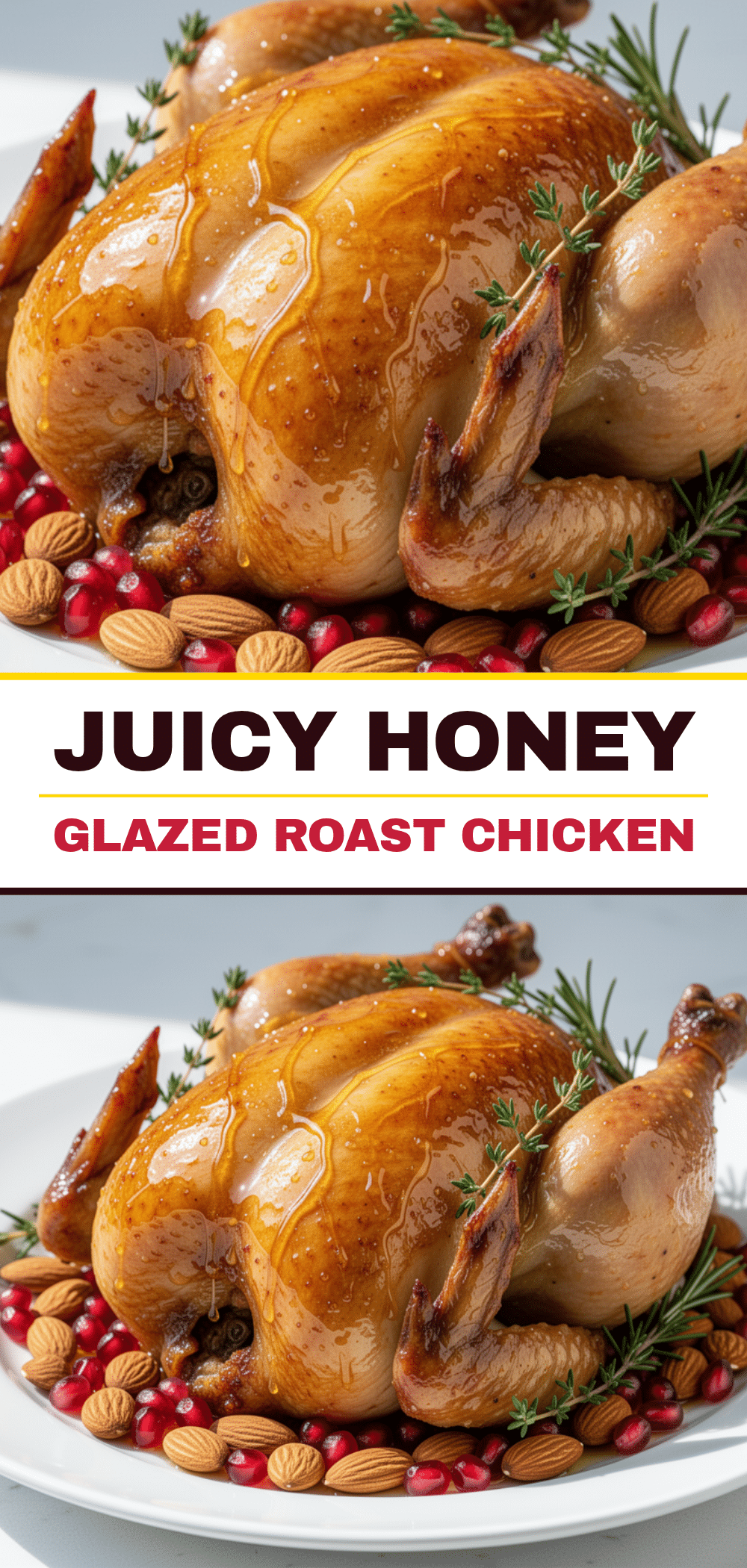
Rosh Hashanah Honey Glazed Roast Chicken: Best Holiday Dinner
- Total Time: 1 hour 45 minutes
- Yield: 8 servings 1x
Description
An elegant and simple holiday centerpiece featuring a whole roast chicken with crispy, golden skin and juicy, herb-infused meat, glazed with a sweet and savory honey mixture.
Ingredients
- 1 whole roasting chicken (4–5 pounds / 1.8–2.3 kg), fully thawed
- 2 tablespoons kosher salt
- 1 teaspoon freshly cracked black pepper
- 1/2 cup (120ml) neutral honey (e.g., clover or wildflower)
- 3 tablespoons (45ml) extra virgin olive oil
- 6 cloves garlic, minced
- 1 tablespoon Dijon mustard
- 2 tablespoons fresh thyme leaves
- 1 tablespoon fresh rosemary, chopped
- 1 large lemon, halved
- 1 large onion, quartered
- 2 cups carrots and celery, roughly chopped (optional)
Instructions
- Preheat oven to 425°F (220°C).
- Pat the chicken completely dry with paper towels. Remove neck and giblets.
- If dry-brining, rub kosher salt all over the chicken inside and out, and leave uncovered in the fridge overnight. If short on time, salt well right before roasting.
- In a small saucepan over low heat, combine honey, olive oil, minced garlic, Dijon mustard, thyme, and rosemary. Warm gently until liquid and combined; do not boil. Set aside to cool slightly.
- Stuff the chicken cavity with lemon halves and onion quarters. Tie legs together with kitchen twine if desired.
- Place the chicken on a rack in a roasting pan. Scatter chopped carrots and celery around the base if using.
- Roast the chicken uncovered for 30 minutes to start browning and crisping the skin.
- Remove from oven and brush generously with half of the honey glaze, getting under wings and along the back.
- Return to oven and roast for another 30-40 minutes. Baste with remaining glaze halfway through.
- Check internal temperature in the thickest part of the thigh (avoiding bone); it should read 165°F (74°C).
- Remove from oven, transfer to a cutting board, tent loosely with foil, and rest for at least 15 minutes before carving.
Notes
For best results, dry-brine the chicken 12-24 hours in advance. Do not glaze at the beginning to prevent burning; glaze halfway through cooking. Save pan drippings to make a quick gravy. Ensure chicken reaches 165°F internally.
- Prep Time: 20 minutes
- Cook Time: 60-70 minutes
- Category: Main Course
- Cuisine: Jewish
Nutrition
- Serving Size: 1/8 of the chicken
- Calories: 380
- Sugar: 10
- Sodium: 450
- Fat: 22
- Saturated Fat: 6
- Carbohydrates: 12
- Protein: 35
Keywords: Rosh Hashanah, holiday dinner, roast chicken, honey glazed chicken, crispy skin, Jewish holiday recipes, easy roast chicken